Belgium Real Estate Market 2026: The Split Between Mid-Market Cooling and Luxury Resilience
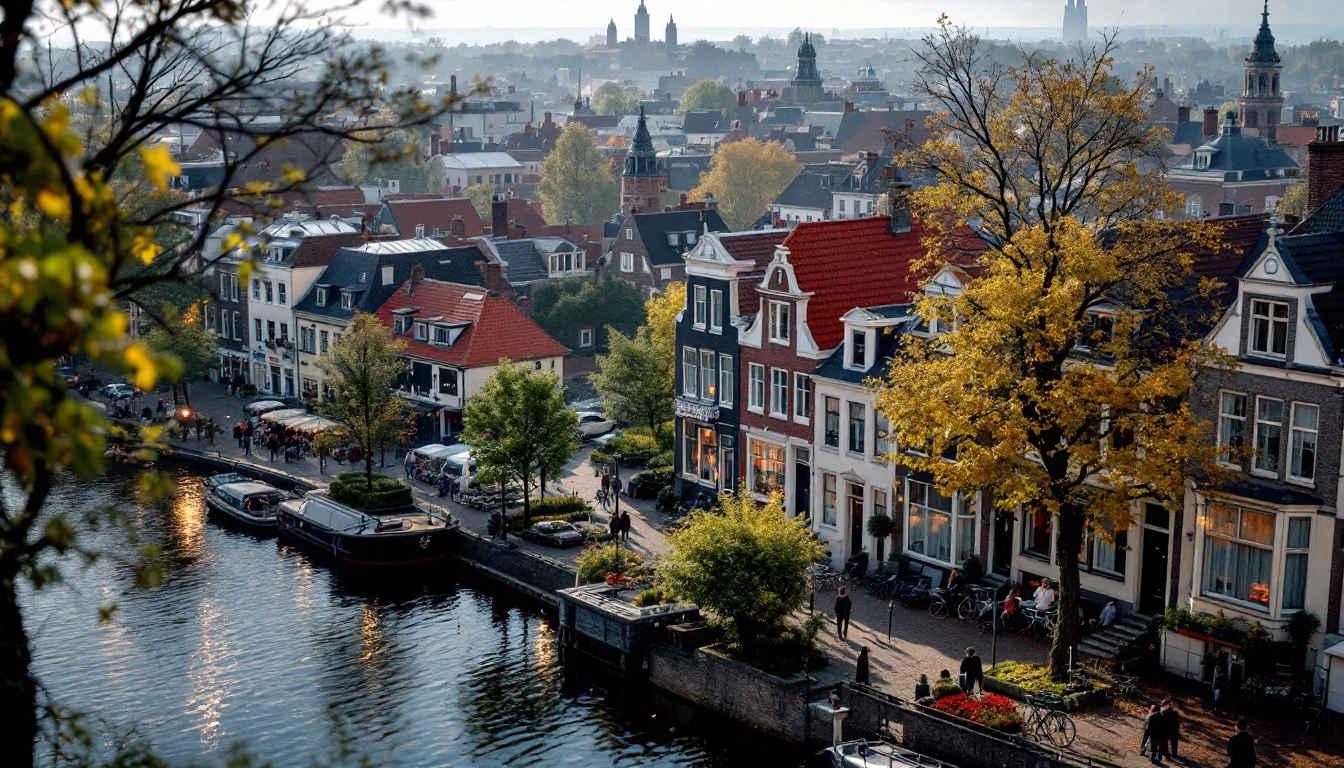
Data from the first half of 2026 show that relying on a single national average to understand Belgian property dynamics provides an incomplete picture. The national landscape shows diverging trends. On one end of the spectrum lies a cooling mid-market, constrained by shifting fiscal policies and rising mortgage rates. Here, buyers face affordability challenges, leading to a noticeable deceleration in transaction momentum across standard property tiers.
Conversely, the upper echelon of the housing stock tells a different story. A resilient premium segment continues to show stability, operating with less exposure to the rate vulnerabilities affecting standard residential properties. For these high-net-worth buyers, raw square footage is increasingly evaluated alongside sophisticated technical performance and transaction discretion. Understanding this year's property environment requires acknowledging this split. The era of uniform property appreciation has moderated, replaced by an environment where energy efficiency and turn-key readiness are increasingly important buyer criteria.
Key Takeaways
- Macro-level price contraction: A measurable cooling phase is underway, marked by a slight quarterly price drop in early 2026 as broad market activity moderates against rising financing costs.
- Sharp regional divides: Housing valuations vary drastically depending on geography, with standard attached properties in Wallonia pricing at a fraction of their equivalents in the Brussels-Capital Region.
- Fading fiscal incentives: The temporary transaction momentum generated by regional tax adjustments has begun to dissipate, further slowing middle-market activity.
- Luxury market resilience: High-end transactions remain solid, driven by off-market discretion and a rigorous demand for properties offering energy performance and immediate livability, even as specific sub-segments like million-euro apartments face declining sales.
The 2026 Market Paradox: Macro Cooling Meets Luxury Resilience
The Macroeconomic Cooling Effect
Evaluating the residential sector requires synthesizing seemingly contradictory signals into a unified market picture. The broader consumer segment is undeniably losing momentum. According to Eurostat's "Housing price statistics - house price index" (2026), Belgium recorded a quarterly house price decrease of 0.8% in the first quarter of 2026 compared with the preceding quarter. This contraction placed the nation among a group of four European Union countries where residential valuations fell on a quarterly basis during that specific timeframe — alongside Finland, France and Hungary — even as EU house prices rose 5.1% year-on-year over the same period.The Drivers Behind the Slowdown
The reasons for this broad deceleration are rooted in immediate financial pressures rather than long-term structural flaws. The Global Property Guide's "Belgium's Residential Property Market Analysis 2026" analysis notes that activity in the Belgian housing market is expected to moderate in 2026. This normalization occurs as the immediate effects of a regional tax reset fade from buyer consciousness. Furthermore, while the fiscal urgency subsides, standard mortgage interest rates continue to edge upwards, squeezing purchasing power and effectively capping the prices sellers can command in the middle tiers.The High-End Exception
However, these macroeconomic headwinds fail to penetrate the highest pricing tiers, which contextualizes a falling national index alongside strong individual sales. According to Christie's International Real Estate Belgium's "Luxury Real Estate Trends Belgium 2026" report, the Belgian luxury real estate market remains resilient and solid, even as the broader residential market cools.Premium property buyers are becoming considerably more selective. Their focus has pivoted aggressively toward intrinsic property value, placing far greater emphasis on quality, privacy, energy performance, and lasting value. By cross-referencing Eurostat's macro data against Christie's luxury insights, the variations in the Belgian property market become evident. The 0.8% quarterly drop is heavily weighted by the volume of mid-tier homes sensitive to rate hikes, while the luxury market's resilience suggests that capital remains available for assets meeting rigorous contemporary criteria.
Regional Disparities: First Semester 2026 Median Prices
National Baselines in 2026
The aggregate national figures for the first half of the year provide a crucial foundation for understanding buyer realities. According to Statbel's house price statistics (2026), the Belgian median price for an attached or semi-detached house — defined as properties with two or three facades — amounted to 285,000 euros in the first semester of 2026. For buyers seeking more space and structural independence, a detached house featuring four facades or more required a median investment of 402,400 euros during the same period.Regional Breakdown: From Wallonia to Brussels
Beneath these national medians lies a highly fragmented geographical reality. The Statbel (2026) data reveals that the Walloon Region is the cheapest Belgian region for house prices. In this southern territory, the median price for an attached or semi-detached house sits at 195,000 euros, while detached houses command 331,000 euros.In stark contrast, the Brussels-Capital Region easily holds its position as the most expensive Belgian region. Buyers securing an attached or semi-detached property in the capital face median costs of 550,000 euros, and the price for a detached house amounted to 1,230,000 euros.
The Flemish Region occupies the middle ground between these extremes. Northern transactions show attached and semi-detached houses costing 325,000 euros, and detached properties reaching 449,000 euros.
| Region | Attached Median Price | Detached Median Price | 2026 Market Context |
|---|---|---|---|
| Walloon Region | €195,000 | €331,000 | Most accessible pricing, fading tax momentum |
| Flemish Region | €325,000 | €449,000 | Balanced middle-market valuation |
| Brussels-Capital Region | €550,000 | €1,230,000 | Highest barrier to entry, luxury concentration |
The Moderating Tax Surge
The pricing dynamics in the most accessible region are currently undergoing a distinct transitional phase. Following recent legislative adjustments, Wallonia experienced specific demand spikes. However, the Global Property Guide (2026) report highlights that Wallonia's stronger price effect — stemming from the 2025 transaction-tax recalibration — is currently "still significant, but already easing" compared with the start of the year, according to notary Bart van Opstal. The vast gap between Wallonia's €195,000 and Brussels' €550,000 for standard semi-detached structures underscores how local fiscal policies and regional demand create entirely disparate market environments.The New Rules of Premium Real Estate: Turnkey Energy and Discretion
The Demand for Immediate Perfection
The resilience of the high-end sector is matched by a strict evolution in what constitutes a premium asset. In the Belgian top segment in 2026, energy-efficient and move-in-ready properties are no longer a bonus but an expectation, as detailed in the Christie's International Real Estate Belgium (2026) analysis. High-net-worth buyers explicitly expect high-performance insulation, contemporary living comfort, and a well-thought-out technical setup alongside aesthetic quality. The integration of modern technical infrastructure is heavily prioritized to satisfy this rigorous new standard.The Decline of the Million-Euro Apartment
This stringent selectivity has fundamentally altered which property types succeed at the highest price points. The Christie's International Real Estate Belgium (2026) report notes that the sale of million-euro apartments in Belgium is declining. The luxury market analysis presents this specific downward trend as a clear sign of how selectively the top segment currently operates. Buyers with substantial capital are heavily favoring properties that offer absolute control over both the physical environment and the structural energy layout, leaving expensive but structurally restrictive apartments facing less demand.Discretion and Off-Market Transactions
Beyond physical attributes, the mechanics of how luxury properties change hands have shifted toward absolute privacy. Discreet sale trajectories and off-market approaches remain relevant in the Belgian top segment in 2026. As Christie's International Real Estate Belgium (2026) observes, this strategy is especially utilized for properties with high recognizability, a special location, or a distinctly exclusive profile. Sellers of these landmark homes increasingly avoid public listings, preferring controlled channels that can quietly match their assets with vetted buyers who prioritize lasting value over public visibility.Beyond the Median: The Hidden Costs and Timeline of Buying in Belgium
The Excluded Transaction Fees
While the official statistics provide a reliable baseline, they do not reflect the actual capital required to secure a home. To understand the true financial burden, a buyer must account for several mandatory additions that official metrics deliberately omit. According to Statbel's (2026) methodology, for the calculation of real estate prices, the institution only takes the agreed sales prices into account, deliberately excluding additional fees.In addition to the agreed sales price, the purchaser still has to pay:
- Registration fees (or VAT in the case of a new building)
- The notary's fees for legal processing
- Mortgage registration fees, if a mortgage loan is taken out
- Any associated bank processing fees
Why Failed Financing Disappears from the Data
The official medians are also defined by their focus on completed closures. Real estate prices as calculated by Statbel (2026) are based on the notarial deeds, i.e., on effective sales, and not on preliminary sales agreements. This methodological choice inherently filters out any transactions where a buyer's financing ultimately falls through.Navigating the Timeline Friction
Finally, understanding the legal timeline is crucial for managing transaction expectations. Following standard legal practice in Belgium, the signature of the notarial deed of sale takes place with a notary within 4 months of the signature of the preliminary sales agreement, as noted by Statbel (2026). This four-month window represents a significant period of administrative friction, during which buyers must finalize complex financing arrangements to complete the purchase.Conclusion: Energy Performance as a Key Differentiator
Looking beyond the first half of 2026, the Belgian property sector is navigating both a temporary cyclical dip and a shifting set of buyer preferences. As analysts note, the current mid-market cooling is rooted largely in immediate financial pressures — such as rising mortgage rates and the normalization of transaction taxes — rather than inherent structural flaws. However, alongside these cyclical factors, a property's technical sophistication and energy performance are acting as increasingly important differentiators, effectively redefining the age-old mantra of "location, location, location" for the modern climate era. Homes that require heavy retrofitting face greater challenges in the cooling mid-market, encountering cautious, rate-sensitive buyers. Meanwhile, premium buyers, who still prioritize location, privacy, and recognizability, are heavily favoring properties that also offer turnkey efficiency. Ultimately, the ability to bypass energy renovations adds a distinct layer of selectivity, shaping a housing landscape where architectural charm is increasingly weighed against technical readiness.